
Rich New Life for an Old Farm: McAllister Ranch
By Amy Darte
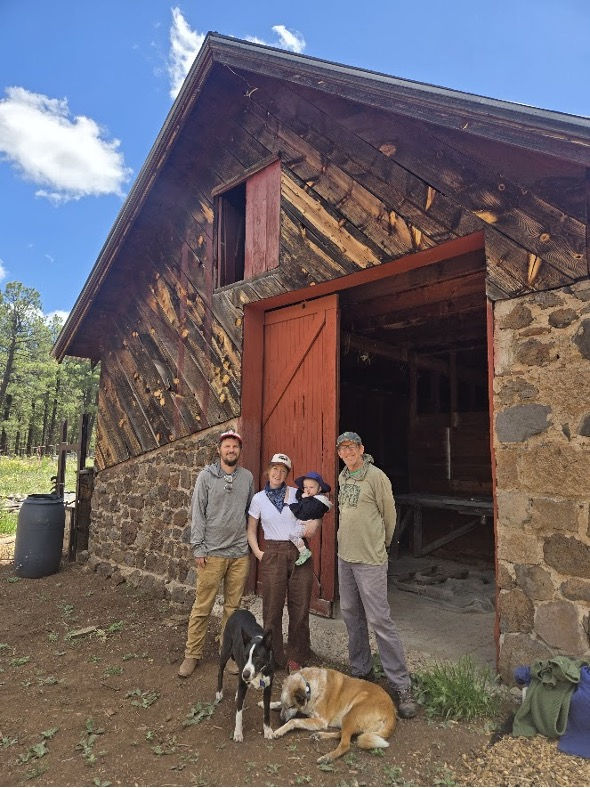
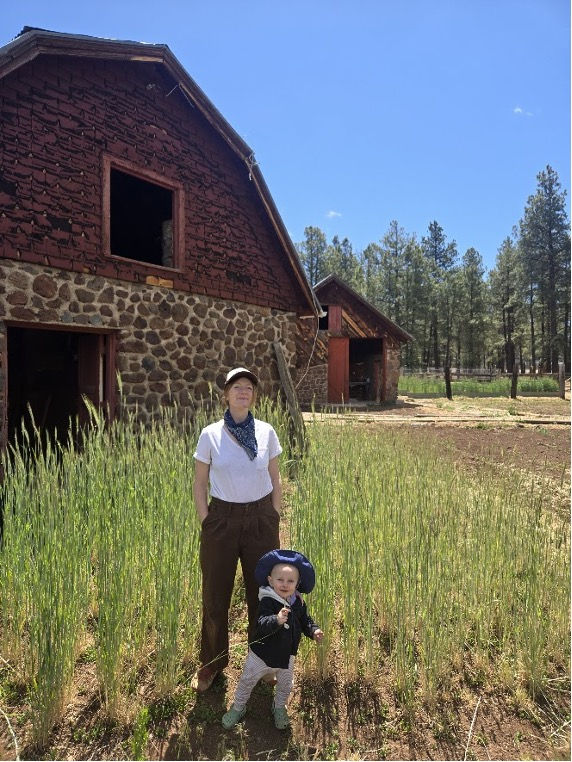
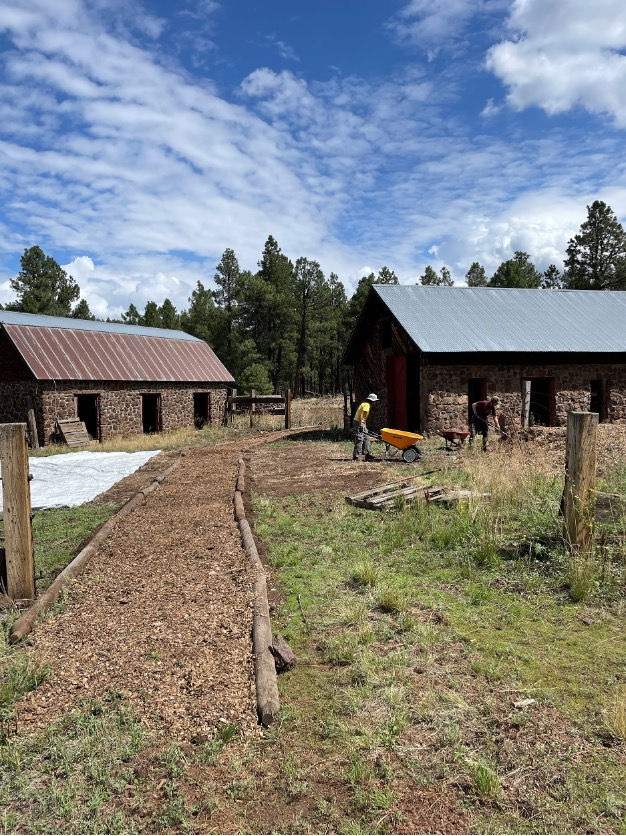
Heading west on Route 66 past the turn for the Arboretum, between the road and the railroad tracks, there is a property that has been untended for nearly 30 years. Old stone barns with red trim and doors sat unloved near an old stone house in disrepair, relics of Flagstaff’s past.
The property is a small portion of the former McAllister Ranch, a large cattle operation owned by Frances McAllister, an active philanthropist and advocate for peace, social justice, and education. She is renowned among the gardening community for founding the Arboretum, where her former log home still stands.
In 2024, the City of Flagstaff’s Sustainability Office solicited applications to find the future stewards of McAllister Ranch, the newest site in their Urban Farm Incubator initiative where they pair new agriculture ventures with city-owned land. They selected Oakley Anderson-Moore and Alex Reinhard, the founders of Superyard Farms, to bring their ideas of new life to the ranch. Since 2021, they have been promoting hyper-local food sovereignty in Flagstaff neighborhoods by turning unused yardspaces into mini farms.
When they applied, they saw McAllister Ranch as an opportunity to grow more food and get more people involved in growing food for their communities.
“Our hope has been for Superyard to expand on borrowed land with new farmers into new neighborhoods until there’s a farm in every neighborhood,” shared Al Reinhard.
“But to actually keep growing, we desperately needed a central space that could not only house tools and infrastructure, but could be used to apprentice new farmers before they steward new micro farms,” explained Oakley Anderson-Moore.
“We believe that place is McAllister Ranch!” concluded Reinhard.
Since being selected, they have been working with the City of Flagstaff on logistics, like changing zoning, working with City planners and community partners like NAU’s Sustainable Communities, and fortifying the soil to make the space into a regenerative farm and community garden. Now they are ready to invite the community to play a significant role in 2026. A large part of the farm will be tended by Superyard Farms and volunteers as they continue to learn about the growing conditions and potential problems like elk pressure. While future goals include an apprenticeship program, a demonstration kitchen, and a food forest, this season the star of the farm is going to be the Living History Gardens.
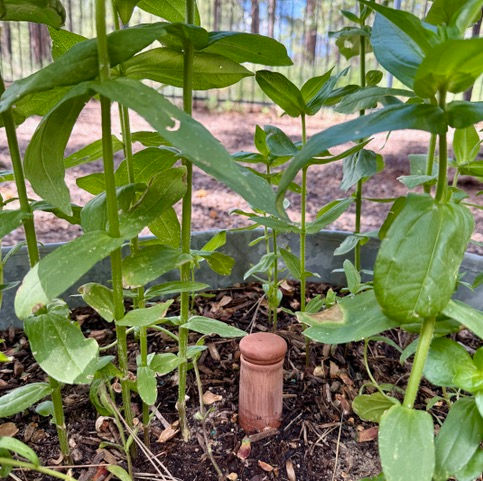
The Living History Garden is made up of six 3.5 x 6.5 ft. metal raised beds that will be stewarded by local gardeners to grow and educate the community about culturally significant crops. Just as the McAllister property has a rich history, each gardener has their own roots. The Living History Garden will be an opportunity for gardeners to become storytellers of the history they share with their crops. A smell from childhood, a taste from ancestral land, or a seed passed from hand to hand could each be inspiration for one of the beds.
If there is an edible plant that tells your story, whether personal, cultural, family, immigrant, indigenous, or ancestral, they are inviting you to submit an application to grow and share your history in one of the beds. There is no charge to apply or participate.
Sara Sprague, a former Superyard farmer, is hoping to grow a bed of collard green varieties to celebrate the heritage of her maternal line.
“Coming from the south, my mother, grandmother, and ancestors on my maternal side often enjoyed southern cuisine, frequented with collard greens,” shared Sara. “I have memories of our childhood home being engulfed in the warmth and welcoming smell of collard greens… Collards’ resilience and ability to weather challenges reminds me of my ancestors’ strength.”
At the end of the growing season, there will be a celebration funded by Creative Flagstaff where the Living History Gardens will be harvested and eaten alongside cooking demonstrations, storytelling, and multi-cultural song and dance. This initiative explores how the unique histories of land, people, and seeds intertwine and shape one another. The revitalization of McAlister Ranch is just beginning, but it has potential to become a vibrant growing space connecting us to each other and our foods in creatively rich ways.
More information and applications for stewardship of one of the Living History Garden beds can be found at www.superyardfarms.com/livinghistory. Applications are due by the end of day Monday, June 8th. You can sign up for their newsletter at the same site to stay connected with McAllister Ranch happenings such as volunteer days.
Amy Darte is a University of Arizona Master Gardener, local beekeeper, and hobby iris hybridizer. Gardening Etcetera is written for the community by certified Master Gardeners of the University of Arizona’s Coconino County Cooperative Extension Master Gardener Program. To learn more visit https://extension.arizona.edu/programs/coconino-county-
master-gardener.






Comments