
A Doney Park Garden with Family History
By Sarah Edmonds
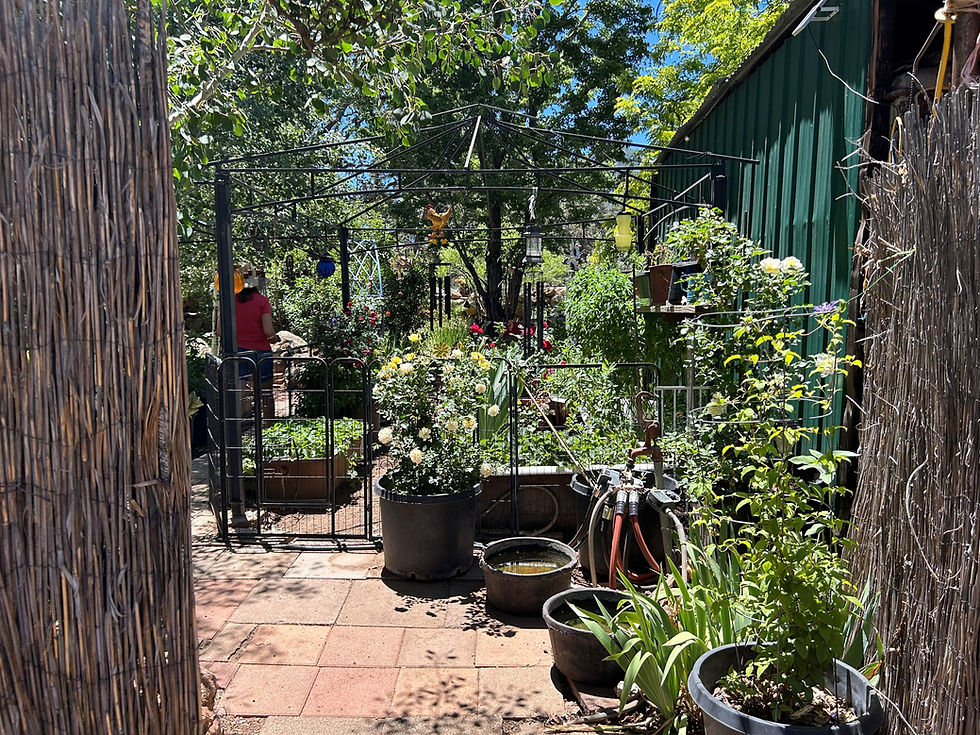
Flagstaff locals may remember Robert (Bob) Dalegowski, a watercolor artist famous for depicting scenes of Northern Arizona, especially the Grand Canyon. He also constructed his primary residence, creating a whimsical house and garden in the Doney Park area that is now owned by his daughter, Marie. The garden will be featured in the August 8th Garden Tour sponsored by the Coconino County Master Gardener Association.
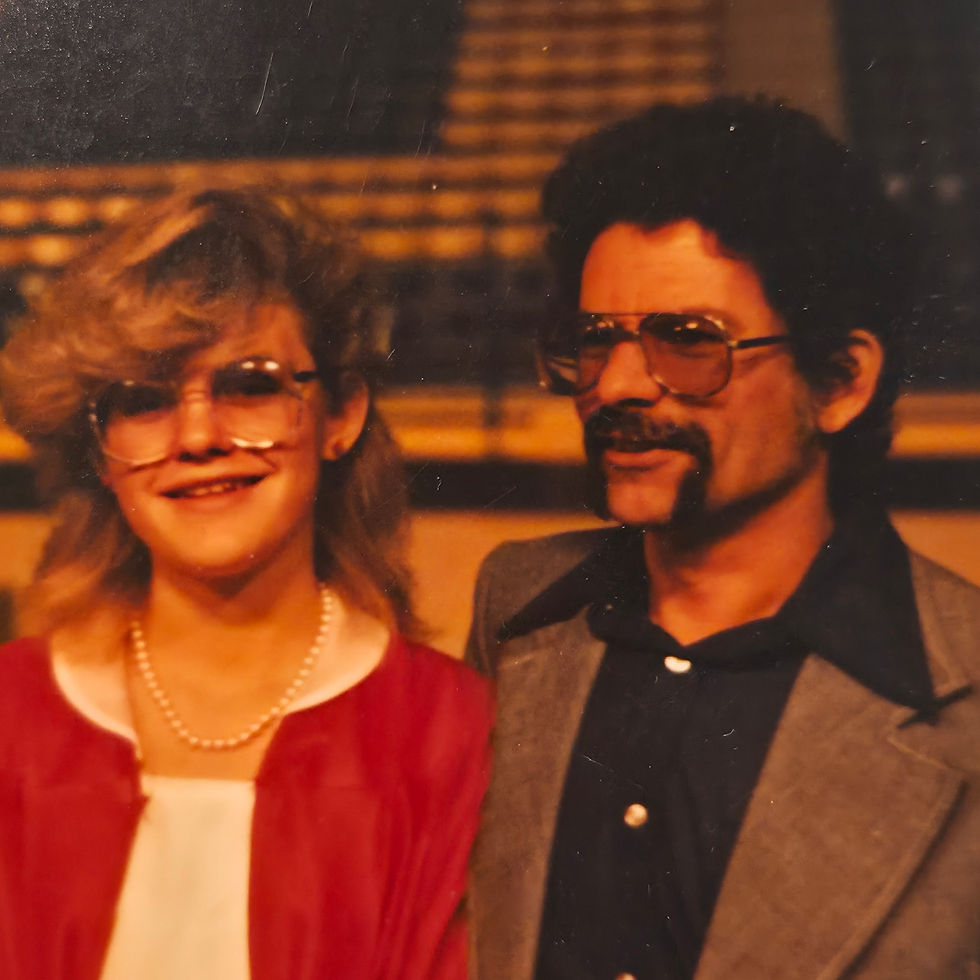
Marie explains her grandparents originally bought 12 acres of land in Doney Park in the 1940s. In 1971, they gave Bob 2.5 acres of the land when he got married. He started building the house that Marie grew up in. His unique architecture includes stained glass windows and doors, winding staircases, rock walls filled with fossils and crystals, and hand-built oak cabinets. The carved designs on the exterior eaves of the house are reminiscent of Poland. After her father’s death in 2018, Marie moved from Winslow with her husband to live in her childhood home.
During her father’s illness, the gardens mostly died. She credits her grandson, Loki, then age 3 (now 11), for helping her replant them. “He helps me harvest the raspberries, tree fruits, and vegetables. We’ve made jellies, ice cream, brownies, tarts, pies and butters with them. He’s also sprinkled the gardens with the walking onions.”

The garden is enclosed by six- to nine-foot walls of dark colored lava rocks, which help protect the plants from the fierce winds that whip through, and from deer. “When they were enlarging Highway 89 from two lanes to four, my dad went up there and talked to the construction crew and offered to take a couple of loads of rocks from them. As kids we’d also go out and pick up boulders at the water treatment plant where Dad used to work.”
Marie’s garden features hollyhocks, iris, roses and daylilies, among other plants. “We started out with three climbing Blaze roses we brought from Winslow. After my mama died, I bought 45 roses to honor her, and every year my husband buys me a rose for my anniversary.” Not all have made it, but there are almost fifty that have.

“My great grandmother in Nebraska had a farm and terraced gardens and she developed a blue colored iris.” Some of those irises were planted by her dad, but Marie has also been to an iris farm near Prescott to get a larger variety of colors. “They are easy, grow very well here, and the gophers have decided they don’t like them,” which is a big plus.
Pocket gophers and rock squirrels add to the challenge of gardening in this location. They will take down plants overnight if they eat enough of the main tap root. “One day I’m looking at the hollyhocks (grown from my grandmother’s seeds) along the rock wall. One was wilted and leaning. I went over and touched it and it fell right over. They had eaten through all the roots.” Marie then discovered a unique way of stopping the gophers. “I started planting some of the hollyhocks in plastic pots. To help conserve water, I was piling up dirt around the pots, but it was very unattractive.” She convinced her husband to use a post hole digger and a shovel to dig holes large enough to bury the pots in the ground. She slices the sides of the pot with a knife before burying, so some roots can get out but the main tap root is protected. So far it has worked.
Her garden has a greenhouse she and her husband built last summer. “We were at Tractor Supply and I saw their little chicken coops. The sides and top are 2x4 inch welded wire. It is strong enough to hold a good amount of snow. I thought this covered in plastic would make a great greenhouse if we put two of them together and took out half of the center wall. Then I ordered some greenhouse plastic off Amazon and got some shade cloth. Next year I’ll get corrugated plastic that will be more permanent.”
Come get ideas for your garden by seeing this unique space during the Coconino Master Gardener Association Garden Tour on Saturday, August 8th from 10am-4pm. Tickets are $18 online at CMGA2026.eventbrite.com until 9 am August 8th, or in person for $15 on August 8th at Warner’s Nursery from 9 am to 12 pm.
Sarah Edmonds became a Master Gardener in 2026. Gardening Etcetera is written for the community by certified Master Gardeners of the University of Arizona's Coconino County Cooperative Extension Master Gardener Program. Have a gardening question? Visit our Online Plant Help Desk at https://extension.arizona.edu/programs/coconino-county-master-gardener.


Comments